
First Aid: Breaks and Sprains
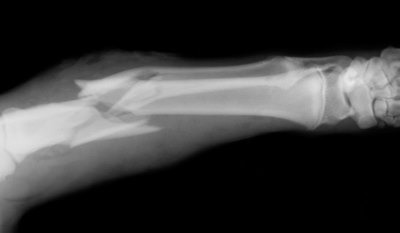
Sometimes it can be difficult, if not impossible to tell the difference between a break or a sprain without seeing a doctor. The pain breaking an ankle, spraining an ankle and straining an ankle are virtually the same.
These days we can (and should) consult a doctor that can help assess the severity or wounds like these. What do we do when we don’t have that option? How would we handle these injuries if hospitals and doctors were far and few between?
Important: To get the most out of this first aid course please do not skip ahead. Everything in this course is designed to walk you through the learning process. From understanding your responsibilities and limitations, to what supplies you need and how to use them.
Course Information:
Lesson 3: Breaks & Sprains Video 1
Video Time: 5:31
This video give a basic overview of what the differences between breaks, sprains and strains are.
The Basics...
What You Should And Shouldn't Do
The Differences
Today we can go to the doctor, get an xray and find out if we broke a bone or just sprained it. In an SHTF situation, we probably won’t have a xray machine in our bug out bag, It helps to understand the symptoms of these injuries and how they differ.
Sprains: are a stretch or tear of the ligament which is the tissue connecting two bones. Ligaments stabilize and support the body's joints. For example, the knee is the “hinge” in our leg that enables us to walk and run and the ligaments in the knee connect the upper leg with the lower leg
Strains: are a twist, pull or tear of a muscle or tendon. Tendons are cords of tissue that connect muscles to bones, whereas ligaments connect bone to bone.
Breaks: could be a fracture, splinter or complete break. The difference between a break and a sprain could be age, bone strength and the cause and severity of the injury. Breaks are often caused by accidents at home, work and sports injuries.
R.I.C.E.
A good acronym to use when treating these types of injuries is R.I.C.E.
Rest: Rest part for 24 to 72 hours, more severe injury longer rest, No exercise until complete heal.
Ice: Apply cold for 20 mins as soon as possible after the accident, several times a day for 1-3 days. Wrap cold object in cloth before applying.
Compression: Wrap w/ elastic bandage, not so tight it reduces blood flow, remove and check every once in a while.
Elevation: Raise injured part above heart level
Strains
 Remember, strains are a pull or twist of the tendon (not ligament) which connects muscles to bone.
Strains can be caused either by stretching or pulling a muscle or the tendon itself. Chronic strains build up over time, these are the result of prolonged and repetitive overuse of muscles and tendons.
Some symptoms of strain include muscle spasms, weakness of the muscle, swelling, and cramping of the affected area. In severe strains happen when the muscle or tendon is partially or completely ruptured. Sometimes we think of strains as minor injuries, but a severe strain can result in serious injury.
With a moderate strain some muscle function will be lost, because the muscle/tendon becomes overstretched and/or slightly torn. With a mild strain is the least severe, the muscle or tendon is stretched or pulled, but only slightly.
A couple of common strains are back pain which can be chronic pain caused by physical labor or activity over a long period of time, or muscle strain such as a hamstring strain caused by hard physical work or even athletes who engage in excessive jumping and running.
Sprains
 Many things can cause a sprain, a sprain is caused by something happening that forces a joint out of its normal position like falling, twisting. Sometimes people feel a pop or tear when the injury happens. A sprain can be mild, moderate, or severe.
Mild sprain: the ligament is stretched, but the joint remains stable and is not loosened.
Moderate sprain: This is a partial tears the ligament, causing the joint to be unstable.
Severe sprain: the ligament(s) tear completely or separate from the bone. This loosening interferes with how the joint functions.
Some common causes are falling and landing on an arm, stepping on the side of your foot, twisting a knee or something like a football player getting tackled and landing wrong. These can cause ligaments around the joint to stretch or tear.
Most sprains happen in the ankle, but it’s not unheard of to sprain a muscle in a different part of the body depending on the physical activity.
Course Information:
Lesson 3.1: Breaks, Sprains & Strains Video 2
Video Time: 16:44
In video 2 we go into a little more detail about the different types of breaks along with strains and sprains.
Breaks & Fractures
Unlike sprains and strains, bone breaks and fractures should always be looked at by a health care provider whenever possible. Breaks are different than sprains because bones are rigid. Think of a bone like a pencil, you can bend a pencil to a certain point, until the pressure is too much and it snaps.

The two main categories of fractures are displaced, non-displaced (open, and closed) Displaced and non-displaced fractures refer to the way the bone breaks.
A non-displaced fracture is when the bone is broken into pieces that can be aligned in place.
A displaced fracture is when the bone is broken into pieces that do not align properly.
Some other categories of breaks include…
- Hairline fracture: The bone is broken in a thin crack.
- Single fracture: The bone is broken only in one place.
- Compression fracture: The bone is basically crushed.
- Comminuted fracture: The bone is crushed or broken into three or more pieces.
- Segmental fracture: The bone is broken in two places, which leaves at least one bone segment floating and unattached.
A compound fracture or an open fracture is when the bone breaks through the skin. The bone may or may not be visible because the bone could recede back into the wound not be visible through the skin.
It’s important to remember that with an open fracture there is a risk of a deep bone infection.
A displaced fracture: happens when the bone snaps into two or more parts and moves so that the two ends are not lined up straight. These are also known as complete fractures.
A non-displaced fracture: is when the bone cracks either part or all of the way through, but does move and maintains its proper alignment. These are also known as incomplete fractures.
Incomplete fractures include...
A “greenstick fracture” where the bone is broken on one side, while the other side is bent.
A buckle or torus fracture where the bone is broken on one side causing a bump or raised area on the other side.

Training & Resources
Below we have 2 PDF guides you can download. The first goes into some more detail about breaks and sprains, and the other talks about healing quicker.
Get Started...
Click the button to start the next module and learn about different types of infections and some of the most common allergies.
Course Home
Click the button to return to the main course page with the list of all the modules in the first aid course.


DISCLAIMER: THIS WEBSITE DOES NOT PROVIDE MEDICAL ADVICE
The information, including but not limited to, text, graphics, images and other material contained on this website are for informational purposes only. The purpose of this website is to promote broad consumer understanding and knowledge of various health topics. It is not intended to be a substitute for professional medical advice, diagnosis or treatment. Always seek the advice of your physician or other qualified health care provider with any questions you may have regarding a medical condition or treatment and before undertaking a new health care regimen, and never disregard professional medical advice or delay in seeking it because of something you have read on this website.